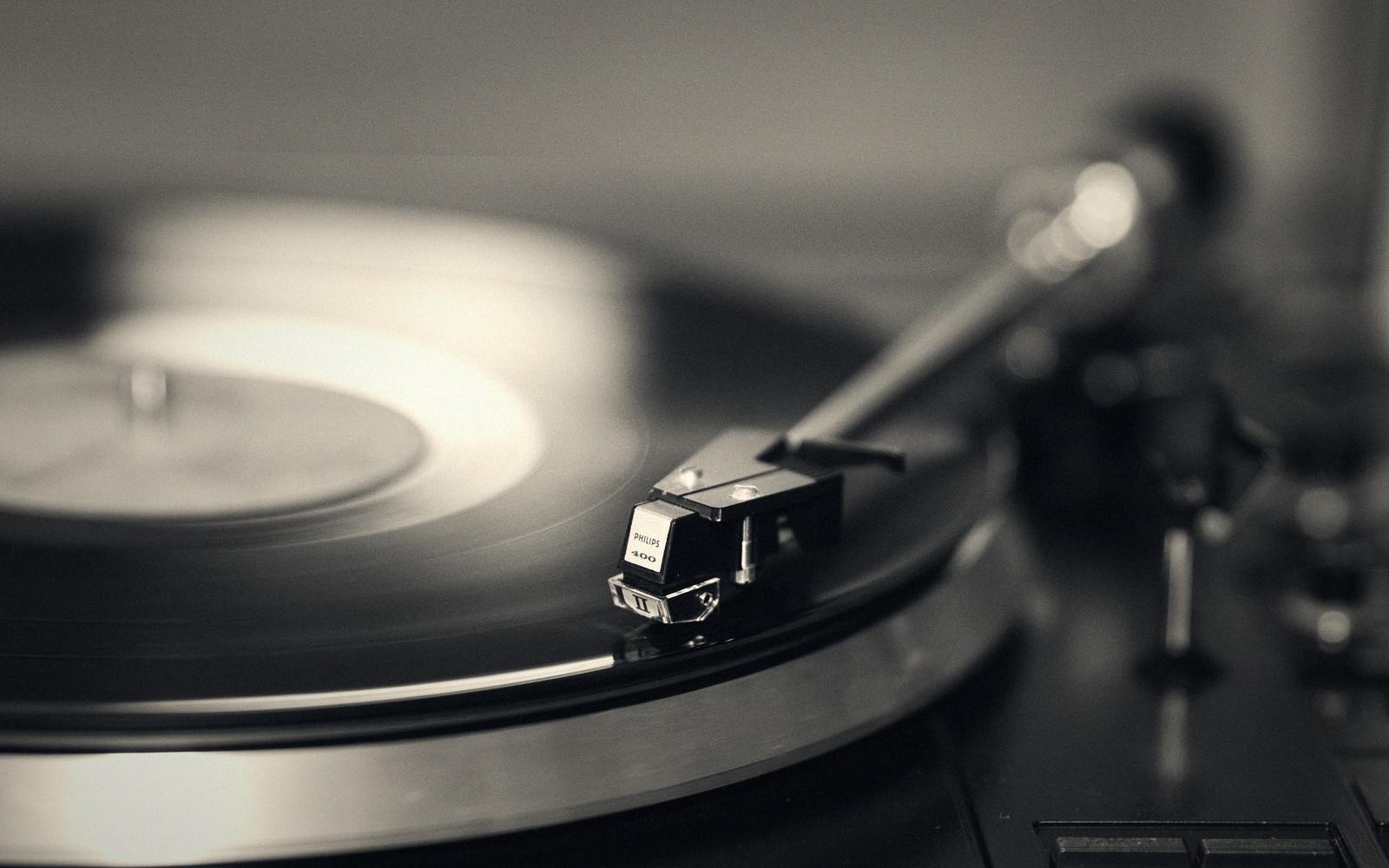
The sound of vinyl is partly physics, partly signal chain, and partly ritual. All three are real — just not equally so.
The Measurable Differences
Start with what a turntable actually does to a signal, because several things it does are genuinely distinctive and not easily replicated.
A moving-magnet or moving-coil cartridge reads a physical groove. The groove is cut with the RIAA equalization curve applied in reverse — bass rolled off, treble boosted — and your phono stage applies the RIAA curve back, restoring flat response. That equalization, standardized in 1954 by the Recording Industry Association of America, is not perfectly implemented twice and perfectly cancelled. Every phono stage has its own tolerance on the RIAA curve; so does every cutting lathe. The result is that the frequency response you hear from a vinyl replay chain almost always carries a small tilt or deviation — typically less than a decibel or two across the audible band, but real. Some listeners hear that tilt as warmth. Some don't notice it at all. Both responses are legitimate.
Then there is distortion. Vinyl introduces several kinds, and none of them are zero. Inner-groove distortion is the most consistent: as the stylus tracks toward the record's centre, the groove velocity decreases, which increases tracking difficulty and raises harmonic distortion slightly. A well-aligned cartridge on a decent arm minimises it; it is never fully absent. There is also the low-level noise floor — surface noise from pressing imperfections, dust, and vinyl chemistry — that sits beneath the music as a gentle hiss or occasional tick. On a well-pressed, clean record, this is low enough to be genuinely unobtrusive. It is still there.
What vinyl does not do, by its physical nature, is hard digital clipping. A groove cannot encode a perfectly rectangular waveform; the cutter head and the stylus both have mechanical inertia. This is one reason that heavily compressed modern masters sometimes sound more fatiguing on CD or streaming than on their vinyl equivalents — not because vinyl is inherently more dynamic, but because engineers have historically cut vinyl masters with slightly more dynamic headroom, knowing that extreme limiting risks damaging cutting heads and styli. The key word is masters: the vinyl pressing of a given album often comes from a different mastering session than the digital version. The format difference and the mastering difference are hopelessly entangled in most comparisons, which matters enormously if you are trying to understand what you are actually hearing.
A groove cannot encode a perfectly rectangular waveform; the cutter head and the stylus both have mechanical inertia.
Frequency extension is another honest caveat. A vinyl record is a broadband medium; well-cut pressings genuinely contain content above 20 kHz, sometimes well above it. Whether that content is musical signal, lacquer resonance, or cutter head artefact is a separate question, and whether human hearing can use it at all is contested. What is not contested is that the high-frequency rolloff of a typical vinyl replay chain is softer than the hard Nyquist cutoff of 44.1 kHz digital — it trails away rather than stopping. That textural difference in how the treble ends is subtle on good replay equipment and arguably zero-audible on average equipment. But it is measurable, and some listeners who have compared carefully report that it is perceptible.
The Signal Chain Around the Record
Here is where vinyl diverges sharply from a CD player or a streaming setup, and where its character is most easily misattributed to the format.
A vinyl system introduces more variables than almost any other source in domestic hi-fi. The turntable bearing and platter affect speed stability — measured as wow and flutter — and any instability adds pitch modulation to the signal. A turntable with a poorly designed or worn bearing can add audible pitch wobble to piano and sustained strings. A good bearing makes this inaudible in practice, but zero is not achievable, and measurement reveals it even when listening does not. Streaming from a well-implemented source adds no pitch instability whatsoever.
Tonearm geometry — the precise alignment of the cartridge in the headshell, the arm's effective length, and the azimuth of the stylus — determines tracking accuracy and channel separation. A cartridge misaligned by a few degrees in azimuth bleeds the left and right channels into each other and loses depth and separation from the stereo image. This is easy to do accidentally and easy to fix with the right tools and patience. The point is that the setup is part of the sound in a way that has no parallel with digital sources: a badly set-up turntable sounds substantially worse than a well-set-up one, independent of the cartridge's quality.
The phono stage — the dedicated preamplifier that applies RIAA equalisation and raises the cartridge's tiny signal (a moving-coil output can be as low as 0.2 millivolts) to line level — contributes its own noise floor, gain, and tonal character. Moving-coil cartridges require considerably more gain than moving-magnets, and providing that gain cleanly is an engineering challenge. A poor phono stage in front of an excellent cartridge is a ceiling. This is one reason that the total cost of a capable vinyl system typically exceeds the cost of a capable streaming setup for equivalent performance: you are paying for a turntable, an arm, a cartridge, a phono stage, and alignment tools rather than a single box. The relationship between sensitivity, gain, and what you actually need in the signal chain is worth thinking through before committing to a cartridge.
The Ritual, Honestly Valued
Here is the part that audio writing sometimes struggles with: the ritual is real, and it has audible consequences, and neither of those facts makes it irrational.
Playing a record requires you to be present in a way that a streaming queue does not. You handle the record, clean it if you are diligent, place the stylus, sit down, and — critically — listen to a side at a time. The album as a sequenced object, designed to be heard in order without interruption, is not a vinyl-specific idea, but vinyl enforces it physically. You cannot shuffle a record. Most listeners find that this attention — the ritual of engagement — alters the experience of listening, not because the molecules of the pressing emit a special warmth, but because concentration is itself an ingredient in how music lands.
That said, there is a long tradition of overstating the ritual's role as sonic evidence. "Vinyl sounds warmer" is sometimes a description of a real frequency-response deviation, sometimes a description of a mastering difference, and sometimes a description of what attentiveness does to perception. Disentangling these three is genuinely difficult in casual listening, and most vinyl enthusiasts have not tried to disentangle them — nor do they need to. The question of whether what you heard was the format, the master, or the ritual matters if you are trying to decide whether to invest in a vinyl system. It matters less if you already love records and are asking whether your enjoyment is legitimate. It is. None of it needs to be purely acoustic to be genuinely valuable.
The physical condition of a record also contributes to this ritual economy. A worn stylus running in a damaged groove is doing active harm — to your record collection and your listening. Regular cleaning (a basic record brush at minimum; a wet cleaner for new-to-you purchases from charity shops or used record stores) is not audiophile mythology. Groove debris shifts the effective replay curve, generates noise, and accelerates stylus wear. The care is practical, not ceremonial. That you come to enjoy the care is a bonus.
A worn stylus running in a damaged groove is doing active harm — to your record collection and your listening.
What Vinyl Changes, and What It Does Not
Vinyl changes the mastering you are most likely to hear — often toward more dynamic, less limited versions of recordings, though this is a function of industry practice and not of physics. It changes the signal with a small, consistent set of distortions and deviations that some listeners find pleasant and others find distracting. It changes your relationship with the listening session, enforcing a pace and attention that the infinite queue of streaming does not. It does not change the underlying recording, which is the same set of performances whoever pressed it. It does not deliver higher fidelity than digital by definition — many vinyl replay chains measure significantly worse than a mid-range CD player or DAC, and a well-maintained vinyl system with a quality phono stage and a decent cartridge is competitive but not transcendent.
The honest conclusion is that vinyl is a genuinely different experience that delivers genuinely different sound — not better, not worse by any universal measure, but different in ways that are partly audible and partly attitudinal. Audible and attitudinal are not opposites. Both are good reasons to play records.
Nothing on this site is scored or ranked. Where a real maker or component is named, it is named because naming it explains something.