Why one bass note booms and the one below it disappears
What is actually happening down there
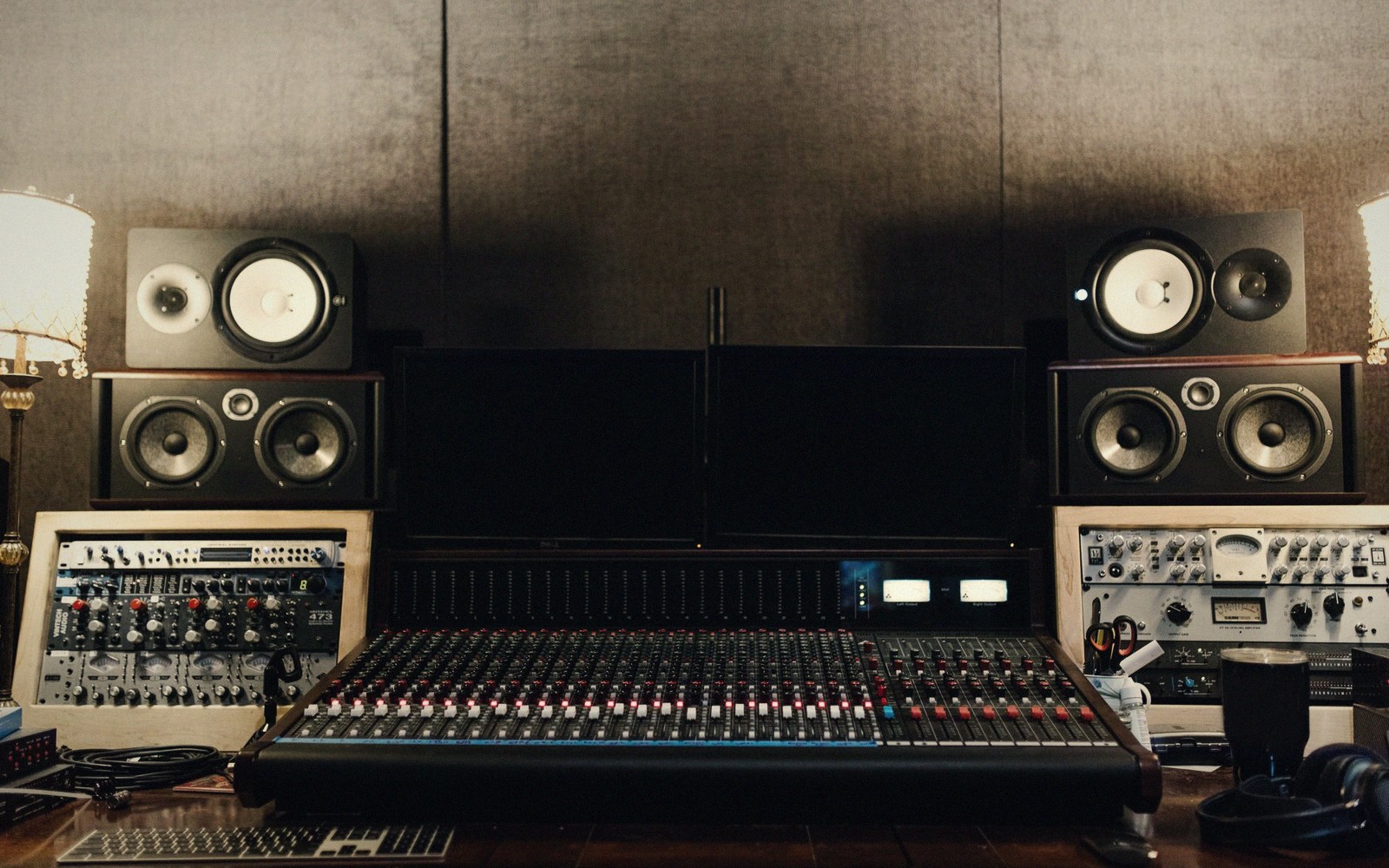
Stand in front of your speakers and play a slow, descending bass line. At some point, one note blooms into the room — full, almost too loud. A step down in pitch and it vanishes. Neither change had anything to do with the recording, the amp, or the speakers. It was the room.
Sound travels as waves, and long wavelengths — bass frequencies — are roughly the same size as your walls. When the distance between two parallel surfaces happens to be a whole-number multiple of a wave's length, the sound bounces back and forth in step with itself and reinforces. At the frequency where this clicks into place, you get a surge of energy: a room mode, sometimes called a standing wave. A half-step down, the geometry no longer lines up and the wave partially cancels itself out. Boom, then silence — all inside the same bar of music.
Every room has a unique set of these resonant frequencies, set almost entirely by its dimensions. A longer room has modes lower in pitch; a squarer room has modes that cluster together and reinforce each other badly because the same length repeats across more axes. This is one reason a non-square room — slightly different length, width, and ceiling height — tends to behave more evenly in the bass. The problems are still there; they are just spread wider apart, which is audibly better than a pile-up at one frequency.
Where you sit matters as much as the room's size. A mode has a physical shape: pressure peaks in the corners and near the walls, a null somewhere toward the middle. Move your listening position a foot in any direction and a formerly inaudible note may suddenly appear — or an overbearing one shrink. This is why placement adjustments are worth trying before anything else; rearranging furniture costs nothing and directly changes which part of the mode's shape you happen to be sitting in.
A mode has a physical shape: pressure peaks in the corners and near the walls, a null somewhere toward the middle.
Acoustic treatment — specifically low-frequency absorbers placed in corners — can reduce how much energy feeds into the worst modes in the first place. It does not eliminate them, but it narrows the extremes. A little bass control in the right corner often does more for perceived clarity than a component change costing many times more.
Nothing on this site is scored or ranked. Where a real maker or component is named, it is named because naming it explains something.