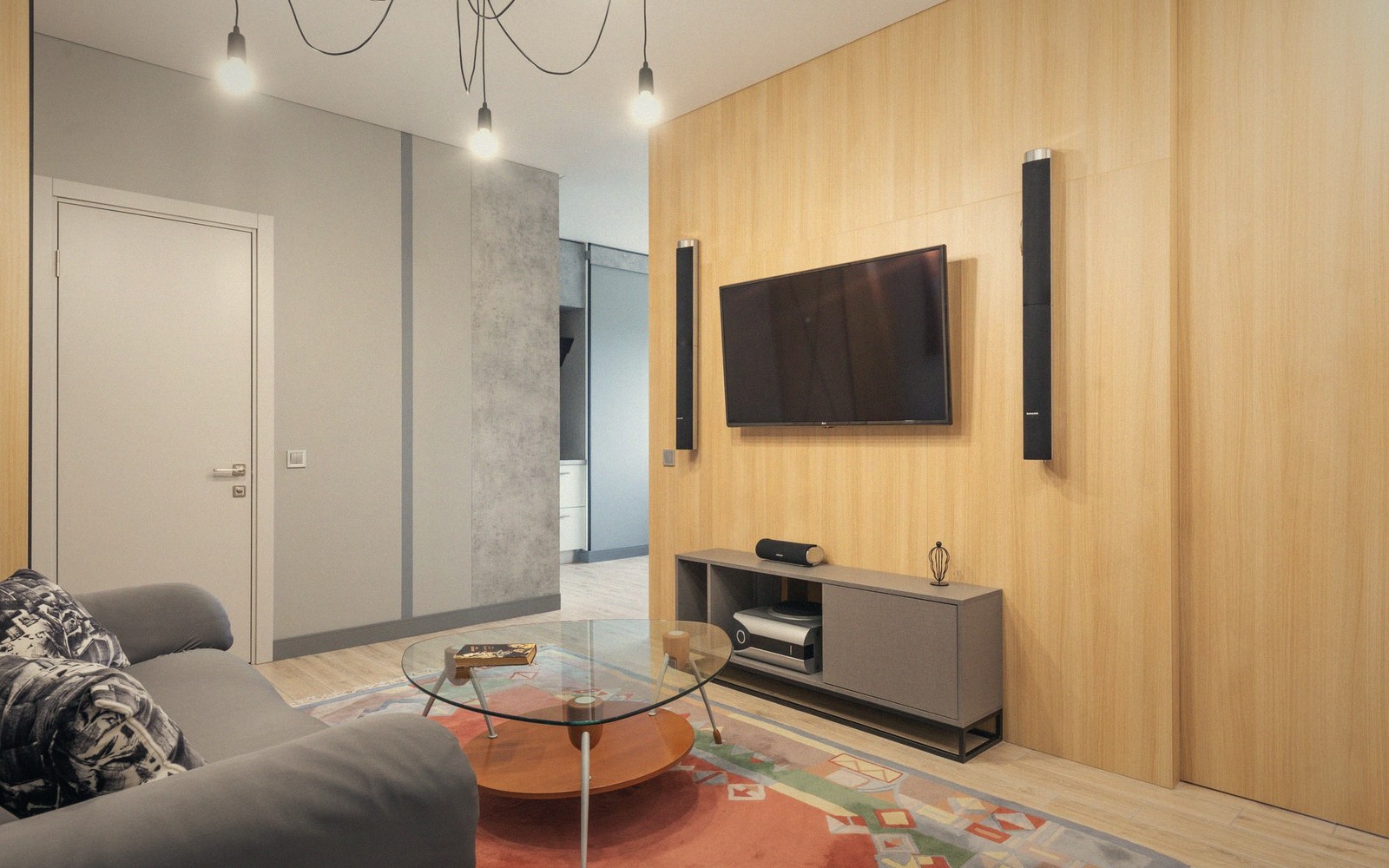
Below a few hundred hertz your walls write the frequency response.
The room is not a passive bystander
There is a persistent fantasy in hi-fi thinking: that the electronics and the speakers are the system, and the room is merely where they happen to live. It is exactly backwards, at least in the frequency range where music has most of its weight and warmth. Below a few hundred hertz, your room does not colour the sound — it writes the frequency response, more dramatically and more personally than any amplifier swap or cable change you could make.
The physics behind this is not exotic. Sound waves are longitudinal pressure waves, and at low frequencies their wavelengths grow large — a 40 Hz note has a wavelength of roughly 8.5 metres. In a typical domestic room, those wavelengths are no longer smaller than the room; they become comparable to it, and they begin to interact with it as a resonant structure. The walls, floor and ceiling are not neutral surfaces that reflect a signal unchanged. They are boundaries that cause waves to double back, stack with their reflections, and at specific frequencies produce massive peaks or near-total cancellations. These are room modes, and they are audible to everyone — not just trained listeners, not just obsessives, but anyone who has ever heard a bass note disappear when they move slightly on the sofa, or boom unpleasantly in one corner of the room.
At higher frequencies — broadly above 300–500 Hz — the situation is different. Wavelengths are short, reflections multiply rapidly, and the room behaves more diffusely. Acoustic treatment, speaker toe-in, first-reflection absorption, and the many placement choices available to you all have real and useful effects in this mid and high range. But in the bass, only a handful of levers exist: where the speakers sit, where you sit, and whether you choose to address the room's acoustics with something more substantial than a bookshelf of paperbacks.
| Close to the front wall | Pulled out into the room | |
|---|---|---|
| Bass level | Reinforced — the boundary stops the sound dispersing that way, effectively doubling output. | Attenuated, and more even across notes. |
| Definition | Heavy and indistinct across a narrow band of the low end. | More articulate; individual notes separate. |
| Which designs care most | Rear-ported cabinets are the most sensitive to it. | Sealed and front-ported designs are less affected either way. |
| Cost | Nothing. | Nothing — 30 to 50 cm is a starting point. |
What the room actually does to bass
Picture a rectangular room as a three-dimensional resonant cavity. Every pair of parallel surfaces — the two side walls, the front and rear walls, the floor and ceiling — has a fundamental resonant frequency determined by the distance between them. A room that is 4 metres wide will support a strong axial mode at roughly 43 Hz; the room that is 5 metres long adds one near 34 Hz. These are not subtle dips — at the mode frequency the response may peak by 10, 15 or even 20 dB depending on room construction and furnishing, while at the nulls between modes the bass can fall away to almost nothing over a span of just a metre or two. No amplifier or speaker can undo this, because it is not the equipment's doing.
A room that is 4 metres wide will support a strong axial mode at roughly 43 Hz; the room that is 5 metres long adds one near 34 Hz.
The first and most powerful thing you can do about this costs nothing at all: move the speakers. A speaker placed close to a wall — particularly the wall behind it — receives reinforcement of bass frequencies because the boundary prevents the sound from dispersing freely in that direction, effectively doubling the output. This boundary reinforcement sounds appealing on paper (free bass!) but in practice it tends to exaggerate a narrow band of the low end, which is why so many systems sound heavy and indistinct in the bass when speakers are placed tight against the rear wall. Pulling speakers out into the room attenuates this effect. How far depends on the room and the speaker's design — a rear-ported loudspeaker is generally more sensitive to rear-wall proximity than a sealed-box or front-ported design — but even 30 to 50 centimetres can make a measurable and audible difference.
The listening position matters as much as the speaker position, and the two interact. The pressure maximum of a room mode — the point where its energy is highest — tends to occur at the boundaries, meaning the corners of the room and the walls themselves. Sitting close to the rear wall typically gives you a heavy, elevated bass, because you are sitting in the modal pressure peak. Moving your seat even a metre forward can reduce that peak substantially. The frequency at which this happens varies with your specific room dimensions, but the principle is consistent: away from boundaries, bass becomes more articulate.
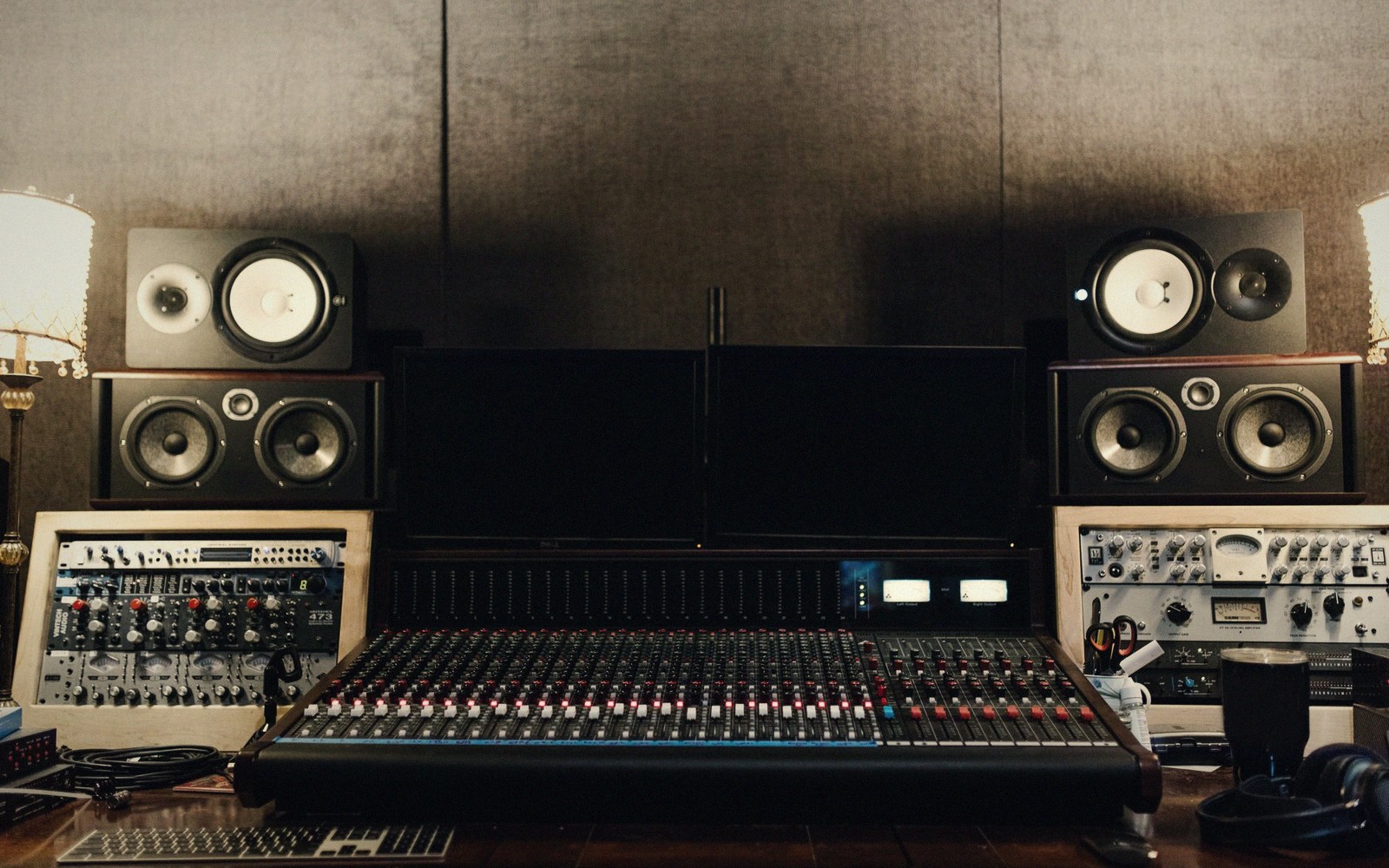
| Lever | What it costs | What it can do | What it cannot do |
|---|---|---|---|
| Placement — speakers and seat | Nothing, and it is reversible | Change what arrives at the listening position more than most equipment upgrades | Remove a mode; it moves you around one |
| Acoustic treatment — corner bass traps | A real budget line | Reduce a peak's height and widen the null either side of it | Eliminate a mode entirely, even heavily corner-loaded |
| Room-correction EQ | Hardware, or DSP already in some preamps | Cut a broad 10 dB hump substantially, when set from measurement | Fill a null — the cancellation happens in air, not in the electronics |
What you can measure, and what to do with it
One of the most useful developments in accessible audio in recent years is the proliferation of free and inexpensive room measurement tools. A laptop or phone, a calibrated USB measurement microphone — available from several reputable manufacturers for well under the price of any meaningful equipment upgrade — and a piece of software such as REW ↗ (Room EQ Wizard, which is free) will show you your room's actual in-room frequency response at your listening position. What appears on the screen frequently surprises people who have spent years adjusting equipment while leaving the room untouched: a broad hump of 10 dB centred somewhere between 60 and 100 Hz, a sharp null at another frequency, and a generally ragged response that no speaker with a flat anechoic measurement could fully overcome once placed in that room.
With a measurement in hand, the levers available to you become clearer. Physical placement changes — of speakers and seat — are always the first correction, because they are free and reversible and genuinely large in their effect. Speaker placement experiments informed by a real measurement are far more productive than placement experiments by ear alone, partly because our hearing in the bass is not particularly precise at localising these kinds of broad, slow-moving spectral changes. After placement, acoustic treatment can address what remains: bass traps — absorptive panels, typically thick and dense, placed in the corners of a room where modal energy concentrates — are the most effective form of low-frequency treatment, though even substantial corner-loaded trapping rarely eliminates a mode entirely; it reduces the peak's height and widens the null, making the problem less dramatic.
If the room's acoustic response after physical optimisation is still significantly uneven in the bass, a room-correction equaliser — either a dedicated hardware unit or a digital signal-processing solution built into some modern preamplifiers and streaming devices — can apply targeted correction. This is not a cure for a difficult room, but it is a genuine tool. Applied to the frequencies where room modes dominate (and applied carefully, with measurement rather than guesswork), digital EQ can reduce that 10-dB hump substantially. It cannot, however, fill a null — you cannot add level at a frequency where cancellation removes it at the listening position, because the cancellation is physical, not electrical. This is an important limit to understand: EQ lifts and cuts, but it cannot overcome a deep modal cancellation by boosting the electronics upstream of a null that exists in air.
The proportion that matters
The reason this is worth a dedicated examination — and worth your afternoon — is proportion. A reader who has spent money on a better amplifier, a better turntable, or a better pair of speaker cables, while never measuring or addressing the room, may have improved the performance of equipment feeding a filter that undoes much of that work below 200 Hz. The room acts on everything equally: vinyl and streaming, cheap and expensive, old and new. Moving a speaker 40 centimetres and repositioning your chair is not a consolation prize for people who cannot afford better equipment. In many rooms it produces larger changes to what you hear at the listening position than any electronics upgrade would.
In many rooms it produces larger changes to what you hear at the listening position than any electronics upgrade would.
What sits between your speakers and your ears is always a room. It has weight, dimensions, surfaces, and physics, and it is doing something specific and powerful to the music before it reaches you. The sensible approach is to find out what, take the free steps first, and understand what you own before you spend on what you do not.
Nothing on this site is scored or ranked. Where a real maker or component is named, it is named because naming it explains something.